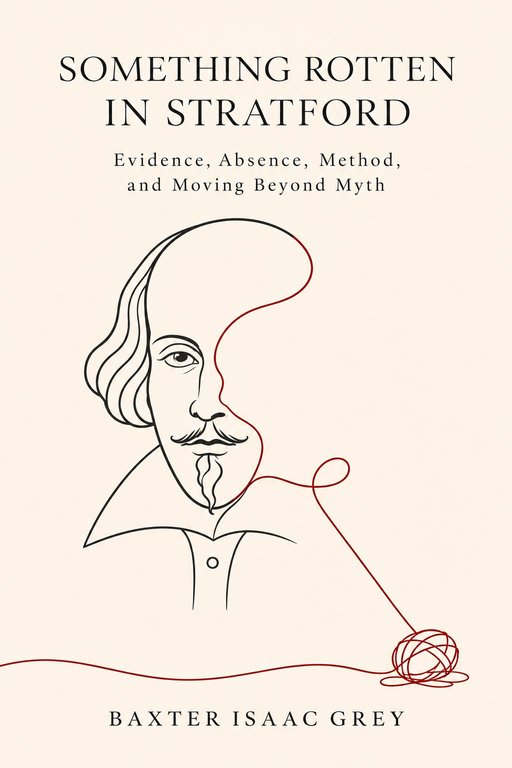
The book · Coming soon
One standard of evidence. Twenty-five writers of the same age. Guess which one fails it.
SOMETHING ROTTEN IN STRATFORD
Evidence, Absence, Method, and Moving Beyond Myth
Exhibit A · The Authorship Chain
Twenty-four Authorship Chains close. One does not.
On one side, a real man recoverable from the records. On the other, an author recoverable from his works. The question: does an independent lifetime record connect the two?
Independent connection: a lifetime record connecting a recoverable historical individual to literary activity.
It must be personal and discriminating, not impersonal or posthumous, and it must make the connection independently, not depend on the attribution being tested. The full definition →
- Ben JonsonClosed
- Thomas NasheClosed
- Philip MassingerClosed
- Gabriel HarveyClosed
- Edmund SpenserClosed
- Samuel DanielClosed
- George PeeleClosed
- Michael DraytonClosed
- George ChapmanClosed
- William DrummondClosed
- Anthony MundayClosed
- John MarstonClosed
- Thomas MiddletonClosed
- John LylyClosed
- Thomas HeywoodClosed
- Thomas LodgeClosed
- Robert GreeneClosed
- Thomas DekkerClosed
- Thomas WatsonClosed
- Christopher MarloweClosed
- Francis BeaumontClosed
- John FletcherClosed
- Thomas KydClosed
- John WebsterClosed
- Shakspere of StratfordIndependently unclosed
Price's twenty-four, tested on one standard: all twenty-four close. Shakspere: independently unclosed.
Every Authorship Chain in detail →Something is rotten in Stratford
The attribution claims more than its evidence can warrant.
For four centuries it has been taught as fact and defended as faith. His name was on the title pages. Not one independent record from his lifetime survives putting the pen in his hand.
No myth ends by mere debate. It ends when it is formally falsified: when one standard of proof is applied evenly to the historical record, and the myth fails it.
This book does just this. Within its stated test, the Stratford attribution fails.
The post-Stratfordian era, moving beyond Stratfordian myth, begins with a method.